Story by Richard Kofi Boahen, Baakoniaba
The Women Association for Environmental Sustainability (WAES), a non-governmental organisation, has intensified its community sensitization forums on the need to include women and girls in decision-making process at Baakoniaba and its environs in the Sunyani Municipality.
Through the support of the Global Greengrants Fund (GGF), WAES has organized one of such forums for the chiefs and elders of Baakoniaba under the theme: “empowering women for sustainable development through inclusion.”
Holistic growth
Speaking at the program, the Bono Regional Director of the Department of Gender, Joycelyn Adii, emphasized the need for women’s inclusion in decision-making to facilitate the holistic growth and development of society.
She noted that because over 50% of Ghana’s population are women, the country in losing a lot of untapped potentials in a lot of girls and women due to their low level of participation in decision-making process at various levels.
Madam Adii mentioned the National Gender Policy and the Affirmative Action (Gender Equality) Act, 2024, are some of the legislative measures by government to empower women and ensure that they contribute meaningfully to national development.
She mentioned teenage pregnancy, sexual and gender-based violence as well as some socio-cultural practices as some of the factors that militate against women empowerment in the country.

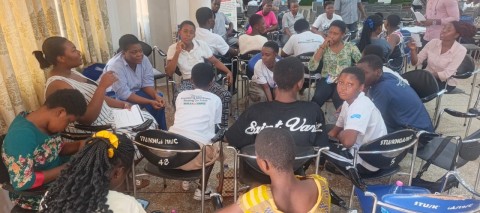
In a related development, WAES has held a community sensitization program at Nanketewa, a farming community near Sunyani.
It was attended by hundreds of community members and basic school pupils.
An official of the Department of Gender, Tina Yeboah, expressed worry about some cultural practices such as such as “this is for women” or “boys don’t do chores” which she said affect equality in homes and communities.
She therefore asked parents to stop assigning roles based on gender and instead share responsibilities fairly among all children.

Touching on the role of parents and teachers in promoting inclusion Madam Tina Yeboah urged them to prioritize the wellbeing of all children, especially girls, and treat them as friends they can support and guide.
Experience sharing
Many girls at the program highlighted the challenge of balancing schoolwork with heavy household duties, which affect their studies and confidence.
The boys, on the other hand, spoke about societal expectations that prevent them from expressing themselves emotionally or taking on certain chores seen as “feminine.”

The Leader of the Women Association for Environmental Sustainability, Theresa Adjei-Boafo, told our correspondent in an interview that the association has since 2014 being holding a series of community awareness programs in and around Baakoniaba with the view to empowering girls and women to be assertive and to encourage them to actively be involved in community-based development activities in their localities, among others.