Story by Richard Kofi Boahen, Sunyani
The Governor of the Bank of Ghana (BoG), Dr. Johnson Pandit Asiama, has assured businesses and Ghanaians that the country’s economy remains resilient despite global uncertainties, stressing that the Central Bank is committed to maintaining low inflation, protecting the value of the cedi and creating an environment that supports business growth and job creation.
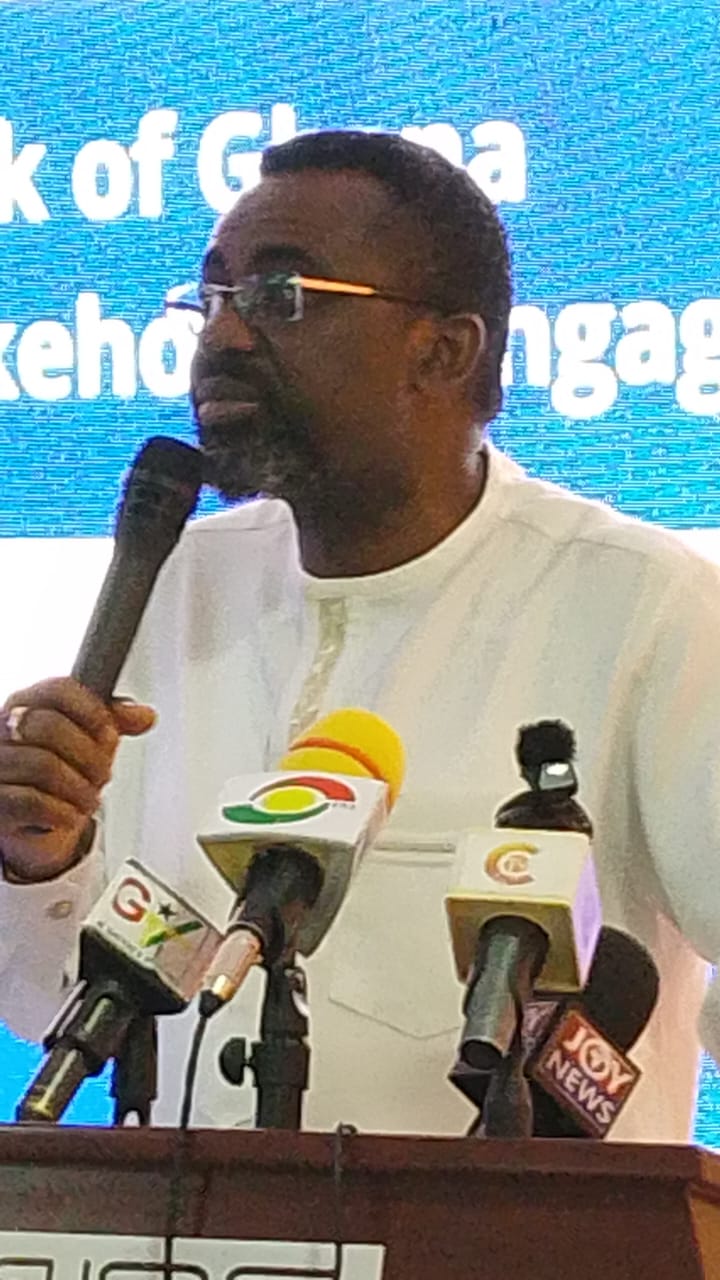
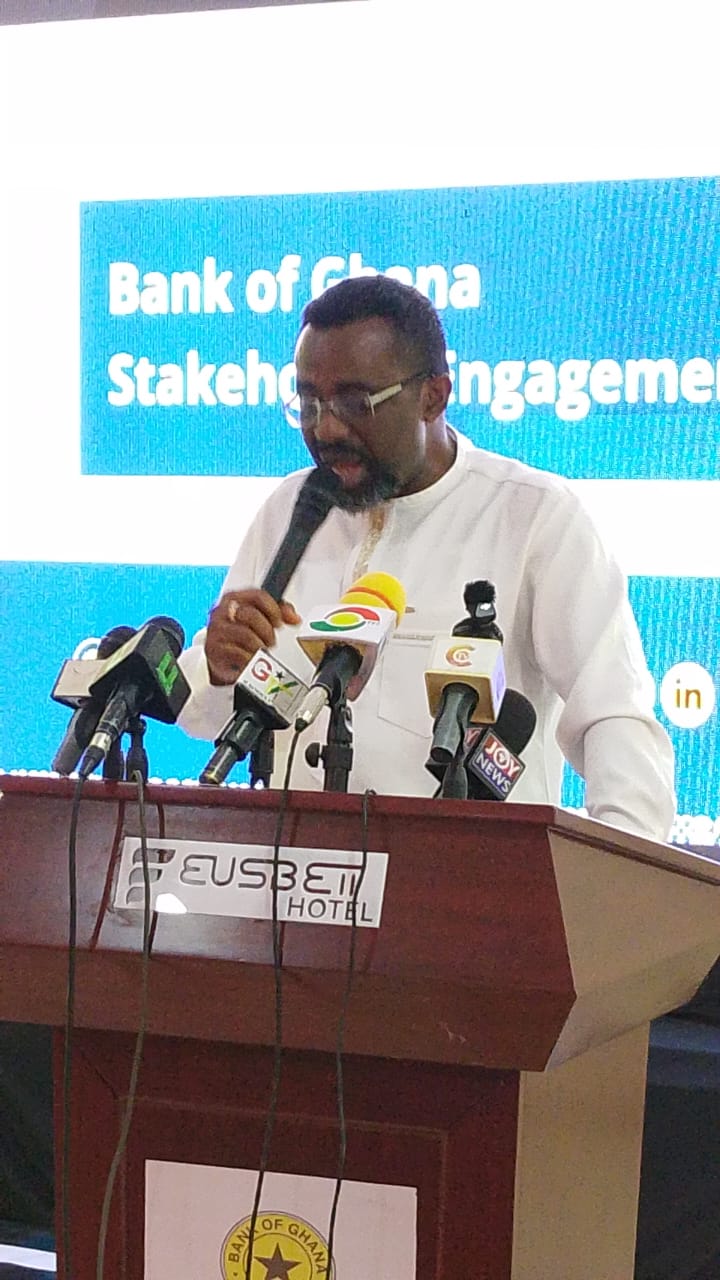
Speaking at a stakeholder engagement session in Sunyani on Wednesday night, Dr. Asiama said the Bank had deliberately introduced the engagement to demystify its operations, enhance transparency and credibility, and strengthen its relationship with businesses and the public.
He explained that the initiative would provide an avenue for the Bank to explain its policies, receive feedback from stakeholders and ensure that its decisions respond to the needs of industry and the wider economy.
Policy rate
The Governor noted that the Bank’s Monetary Policy Committee (MPC), after reviewing both domestic and global economic developments at its meeting last month, decided to maintain the policy rate at 14 per cent. According to him, the decision strikes the right balance between keeping inflation under control while supporting investment, business expansion and economic growth.

Although global uncertainties, particularly tensions in the Middle East and rising crude oil prices, continue to pose risks, Dr. Asiama said Ghana’s economy had continued to perform strongly. He reported that the economy expanded by an estimated 6.4 per cent in the first quarter of the year, up from 6.2 per cent during the same period last year, driven largely by the services and industrial sectors.
Inflation
Touching on the cost of living, the Governor said inflation remained relatively low despite a slight increase from 3.7 per cent in May to 5.7 per cent in June. He attributed the rise mainly to higher transport costs resulting from increased global crude oil prices following the Iran-United States conflict in the Middle East.
“The good news is that inflation remains below the Bank of Ghana’s target range. We are monitoring developments closely to ensure that inflation remains under control because low and stable inflation is good for everyone,” he stated.

Lending rates
Dr. Asiama further disclosed that lending rates had fallen significantly from above 30 per cent to between 15 and 16 per cent, making it easier for businesses to access credit. He said the banking sector had become stronger and more stable, with improved capitalisation, growing deposits and better-quality loan portfolios. Credit to households and individuals, he added, grew by more than 41 per cent in June compared to about nine per cent a year earlier.
The Governor said the Bank was introducing policies to encourage commercial banks to provide more long-term financing to businesses, particularly young entrepreneurs, to enable them to establish enterprises, create jobs and contribute to national development.
External sector
On the external sector, Dr. Asiama said strong gold and cocoa exports had helped Ghana record a healthy trade surplus during the first half of the year, while international reserves had reached about US$12.9 billion, enough to cover approximately five months of imports. He noted that although the cedi came under pressure earlier in the year due to global developments, it had since recovered.
Despite the positive outlook, the Governor cautioned against complacency, saying the global economy remained fragile and that developments beyond Ghana’s borders could still affect domestic economic performance.
Going forward
He reiterated that the Bank of Ghana would continue to pursue policies aimed at preserving macroeconomic stability, safeguarding the cedi, keeping inflation low and maintaining a sound financial system.
“Our goal is to create an economic environment where businesses can grow with confidence, where households can plan for the future and where every Ghanaian can share in the benefits of a stable and growing economy,” he said.
Dr. Asiama stressed that sustaining macroeconomic stability required collective effort and called on policymakers, businesses, financial institutions, traders, farmers, households, the media and the general public to work together.
“Macroeconomic stability is not the responsibility of the Bank of Ghana alone. It is a partnership between all of us. Together, we can build an economy that delivers opportunities and shared prosperity for every Ghanaian,” he said.
Present at the event were the Bono Regional Minister, Joseph Akwaboah Addae and the First Deputy Governor of the Bank of Ghana, Dr. Zakari Mumuni.