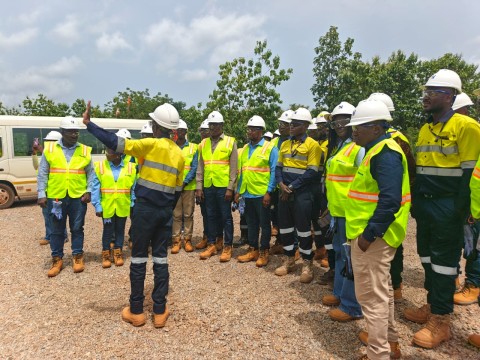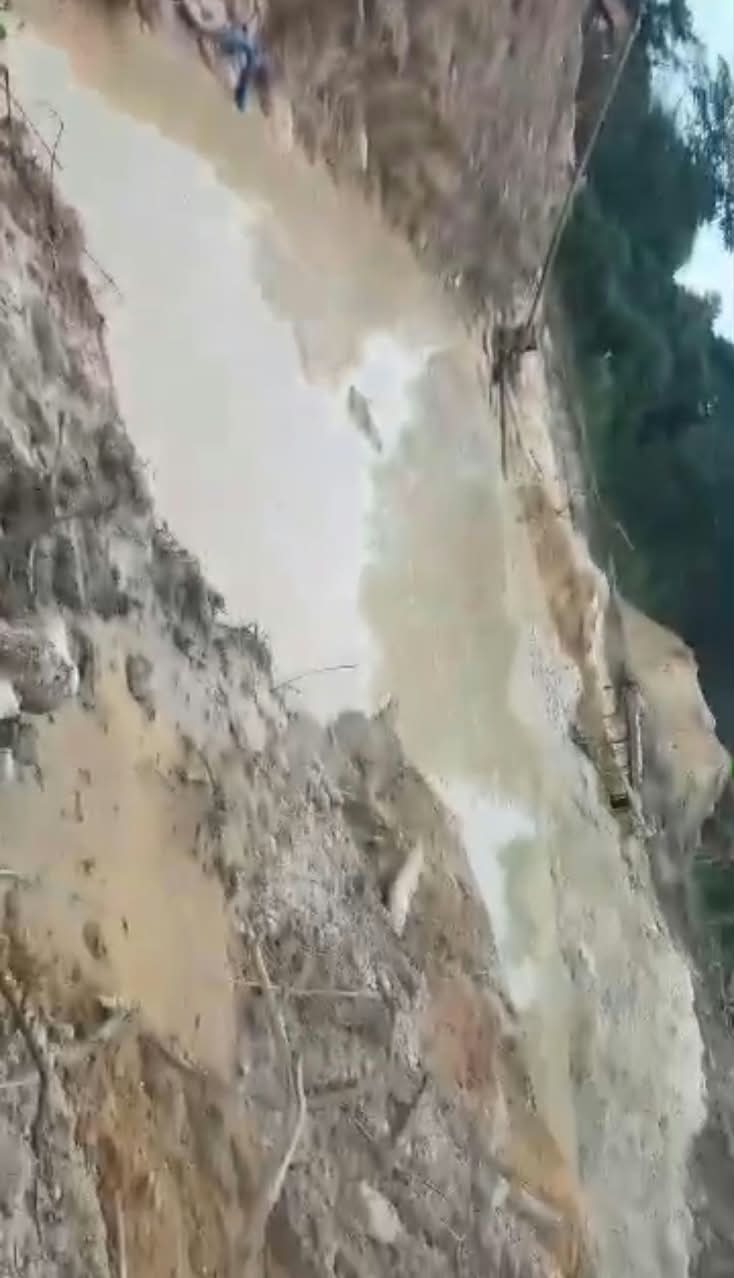
The Bono Region, once renowned for its lush vegetation, serene environment and relatively low incidence of illegal mining, is increasingly grappling with the devastating effects of galamsey.
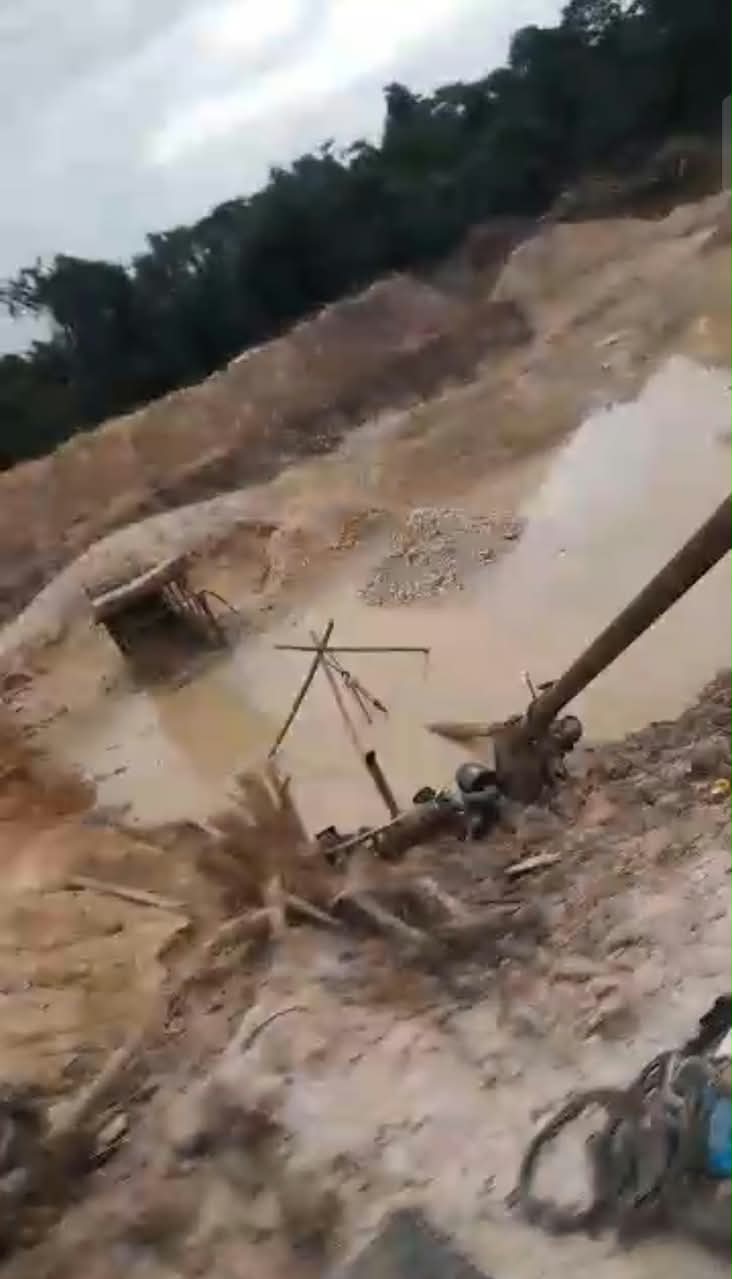
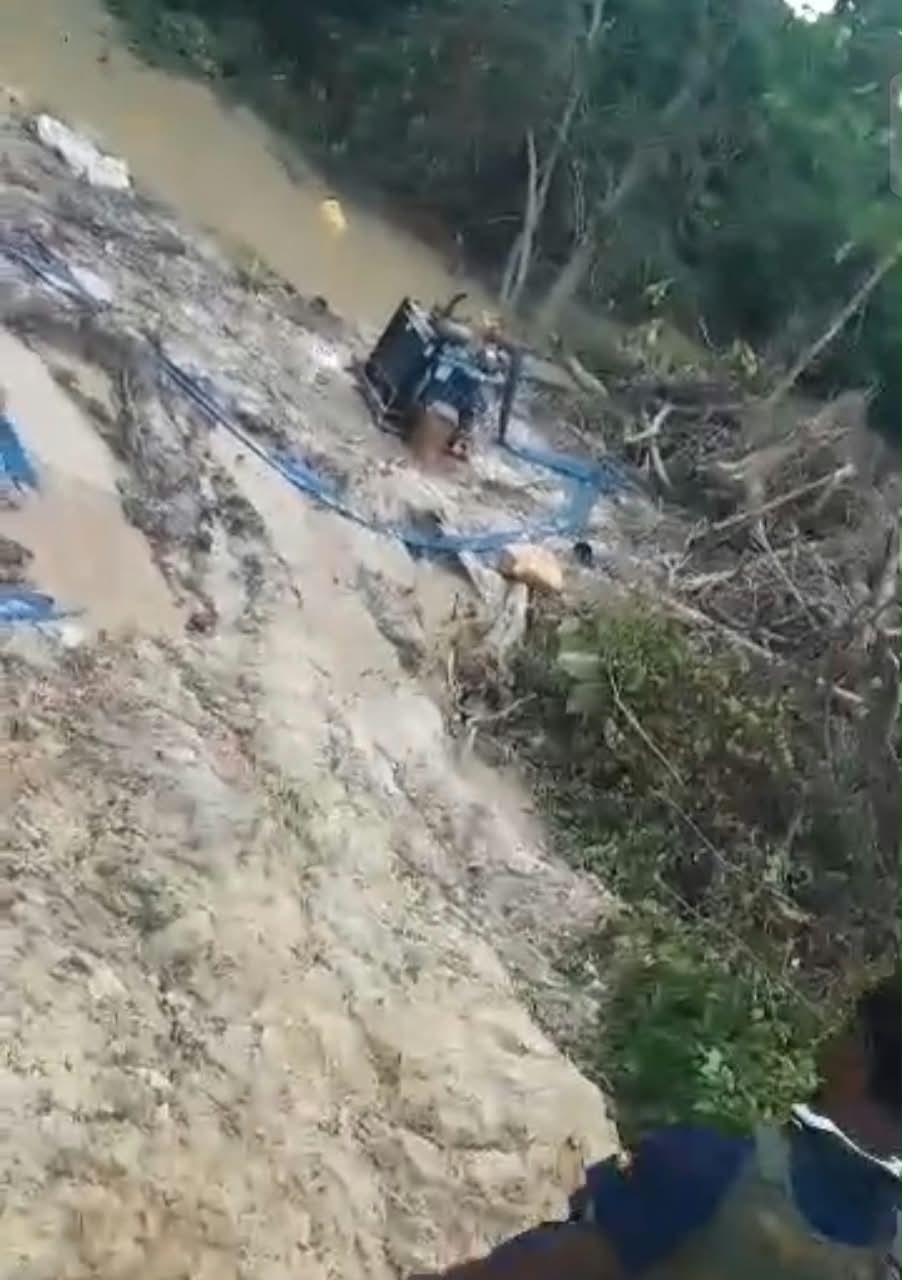
Until recently, several parts of the region were regarded as virtual no-go areas for illegal miners, largely due to the firm stance of traditional authorities against the practice. In the Dormaa Traditional Area, for instance, the Dormaahene, Osagyefo Oseadeayo Agyeman Badu II, has over the years maintained a strong position against illegal mining, with communities traditionally mobilising to prevent such activities.
The situation, however, appears to have changed significantly, with illegal mining activities reportedly spreading to several parts of the region and threatening forests, farmlands and water bodies.
Negative effects
The Tano River, an important source of water for communities across the Bono, Bono East and Ahafo regions, has come under increasing pressure from illegal mining activities, raising concerns about water quality and the livelihoods of communities that depend on the river.
The Amoma River is also facing a similar threat. Residents of Atronie, led by their Chief, Obrempong Diawusie Nana Amponsem Darko II, have raised concerns about the alleged destruction and pollution of the river and questioned the commitment of the Bono Regional Minister, Joseph Addae Akwaboah to addressing the problem.
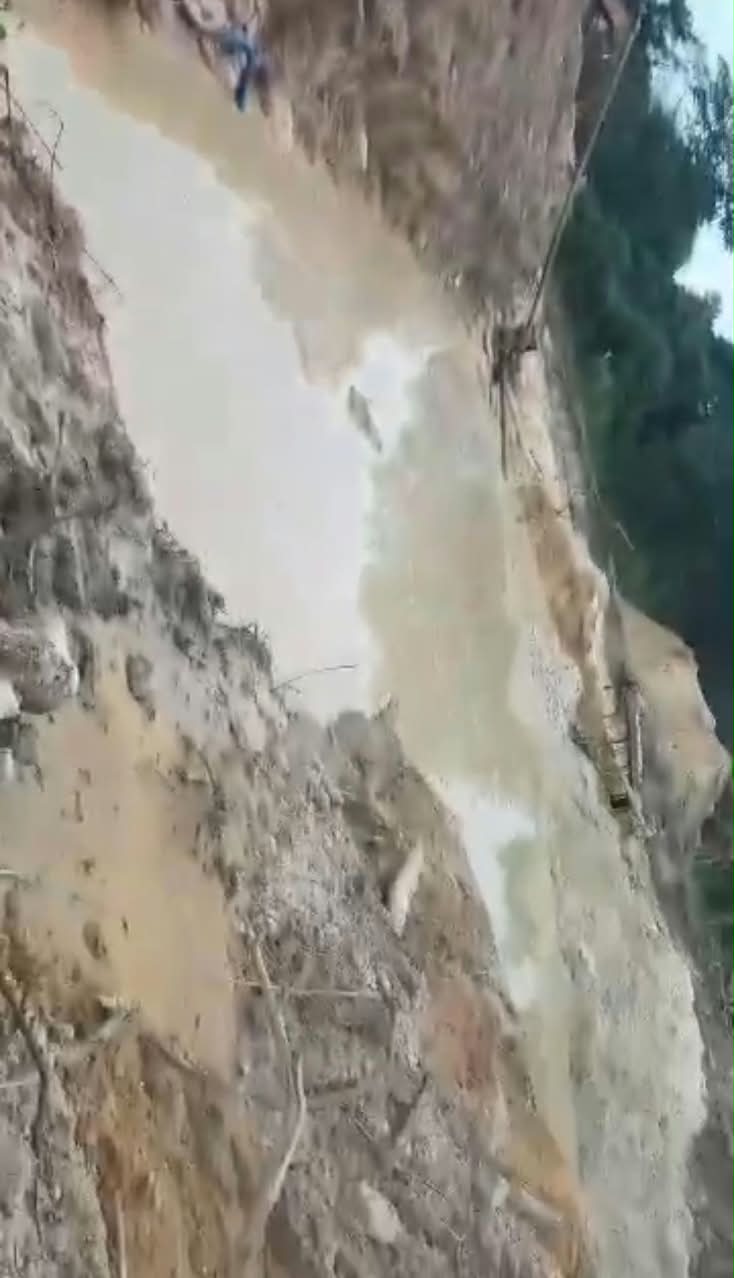
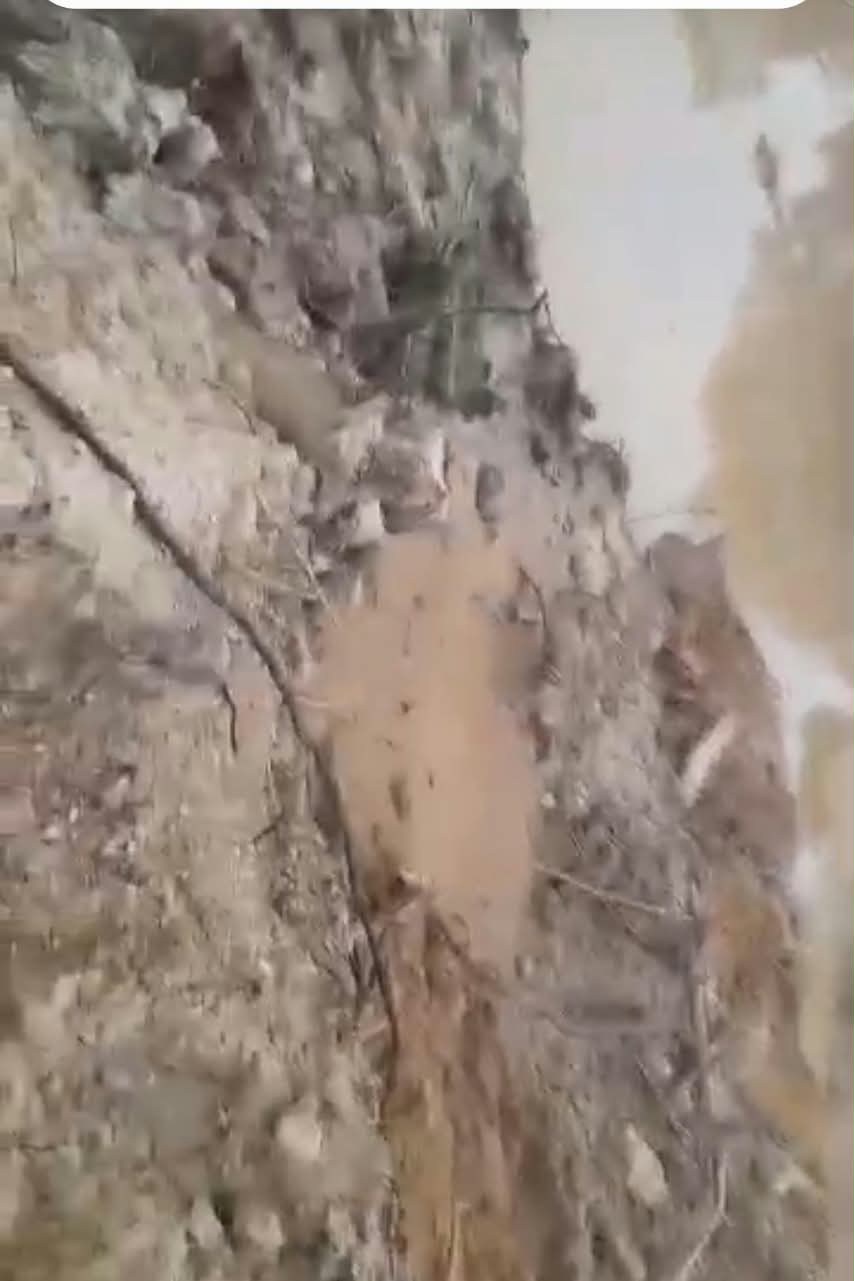
Several communities that were previously largely not affected by galamsey are now reportedly witnessing increasing illegal mining activities. These include Atronie near Sunyani; Nanasuano, Nsapor and Amomaso near Berekum; Akontanim, Kyeremasu and Dormaa Akwamu near Dormaa Ahenkro; and Wewa near Banda Ahenkro.
The spread of illegal mining has consequently triggered concerns among residents, traditional authorities and other stakeholders about the effectiveness of measures being implemented to contain the menace.
Regional Minister’s closed-door meeting with media
Against this backdrop, the Bono Regional Minister, Joseph Addae Akwaboah, met selected journalists and media practitioners at the Residency in Sunyani on Wednesday, August 5, 2026, to brief them on measures being taken to address illegal mining activities in Atronie and other parts of the region since he assumed office.
Details of the discussions were, however, not made public, after the media practitioners were reportedly asked not to publish information from the engagement.
Reputational issue
The growing incidence of illegal mining has prompted questions about the region’s ability to maintain its previous reputation as an area where galamsey activities were strongly resisted.
Some observers have therefore called for stronger collaboration among traditional authorities, security agencies, the Regional Coordinating Council, local assemblies and other stakeholders to prevent the further degradation of the region’s forests, farmlands and water bodies.
They argue that without sustained and decisive action, the Bono Region could face worsening environmental and public health consequences from the expansion of illegal mining activities.
Berekum in red and black
Earlier this morning, the entire city of Berekum went red with demonstration by residents through major streets holding placards with inscriptions such as: We shall stop you vampires, Berekum is not ready to import drinking water, we hope no chief or queen is involved in the galamsey else……, nobody must dare because we are just ready, galamsey leaves our community with mercury poisoning and noboby can take Berekum for granted, among others.
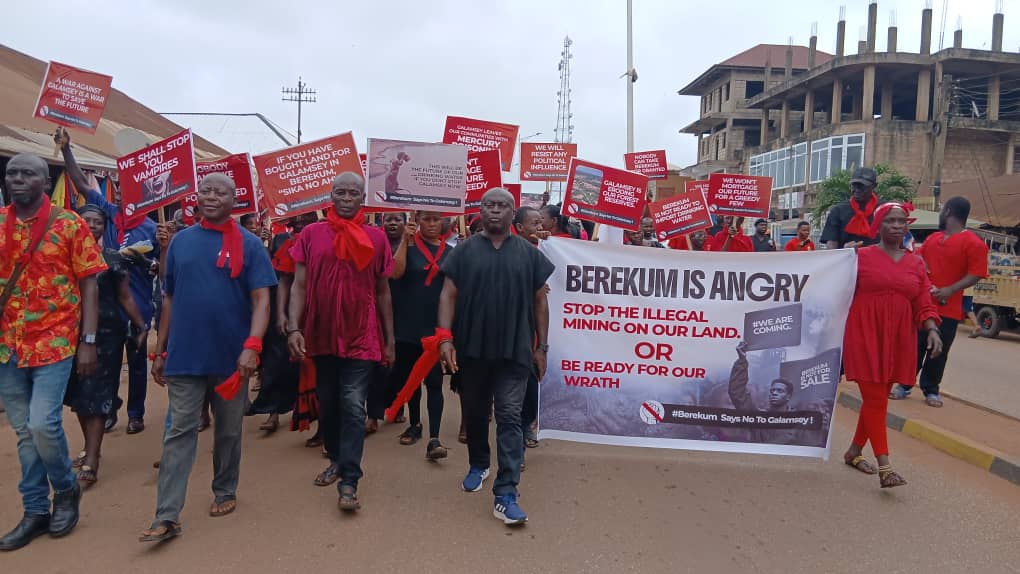
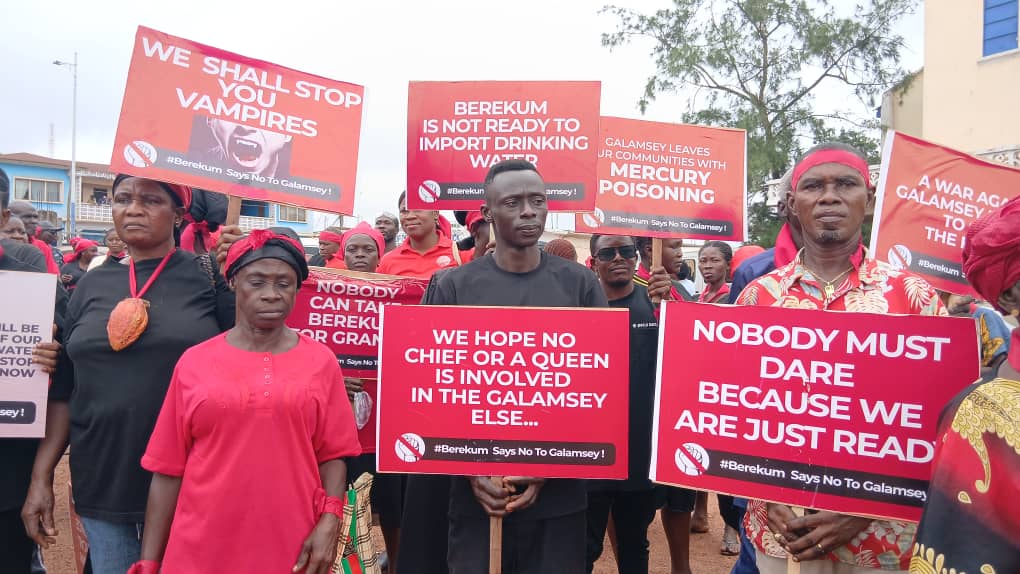
The residents are at a loss as to why galamsey activities are flourishing across parts of the area with impunity.
They wonder whether the Berekum Municipal Assembly and or some chiefs of the area are complicit in this illegality.
Road block
Meanwhile, the chiefs and residents of Atronie in the Bono Region have expressed strong opposition to the response of the Bono Regional Security Council (REGSEC) to alleged illegal mining activities that have polluted the Amoma River and degraded farmlands in the area.
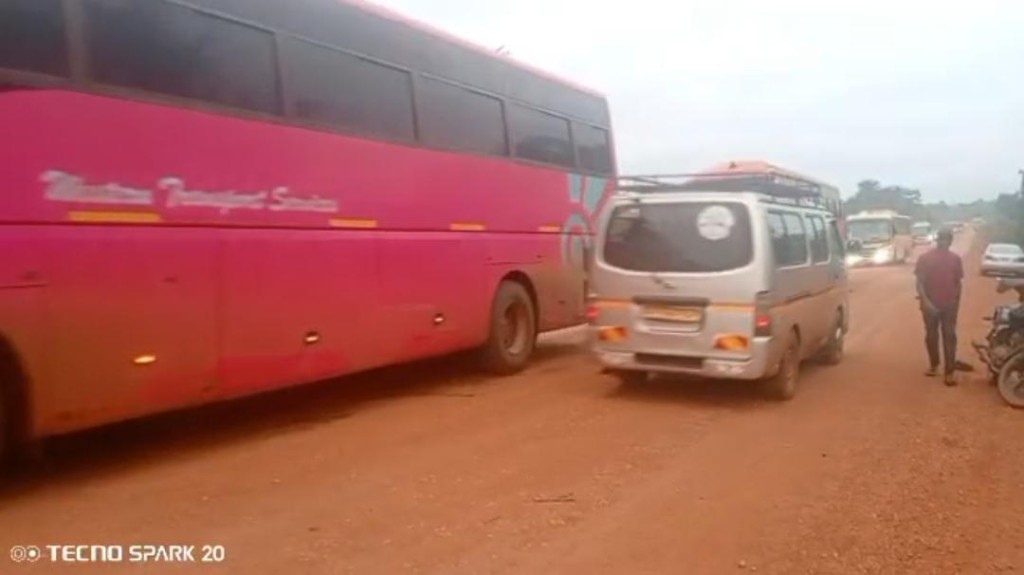

The development followed an incident on Monday, August 10, when residents and traditional leaders reportedly blocked the main Sunyani – Ntotroso highway at Atronie and stopped buses transporting Newmont Ghana workers from Sunyani to Kenyasi and held them for nearly four hours while traditional rituals were performed at the banks of the polluted Amoma River.
The rituals, led by the Chief of Atronie, Obrempong Diawusie Nana Amponsem Darko II, together with traditional priests and elders, were intended to seek spiritual protection for the community and cleanse the area from any calamity residents believe could result from the destruction of the river.


Military and police personnel accompanying the buses reportedly appealed to the chiefs to allow the vehicles to proceed, but the traditional leaders maintained their position until the rituals were completed.
The incident comes amid growing concerns over alleged illegal mining activities at Jinijini, within the Atronie Traditional Area. The Atronie Traditional Authority says the activities have resulted in the destruction of farmlands, pollution of the Amoma River and serious threats to the livelihoods of residents who depend on farming and the river.
In a statement, the Traditional Authority rejected a recent REGSEC response following the Council’s visit to the mining site, arguing that the Council witnessed the environmental destruction but failed to order an immediate suspension of the operations.
According to the chiefs, REGSEC instead directed the operators to produce licences and other relevant documentation for verification. They described the approach as unacceptable, arguing that environmental destruction should not continue while authorities await documentation.
The Traditional Authority also questioned REGSEC’s reference to an alleged land dispute involving the Atronie and Wamfie traditional areas, insisting that land ownership had not formed part of its complaints about the illegal mining activities.
It further expressed concern about armed security personnel allegedly guarding the mining sites and called for the arrest and prosecution of persons found carrying weapons unlawfully or engaging in illegal landguard activities.
The Chief of Atronie accused some government officials and security personnel of failing to take decisive action against the alleged illegal miners. He specifically mentioned the Bono Regional Minister, the Sunyani Municipal Chief Executive and the Member of Parliament for Sunyani East.
Farmlands affected
The Assembly Member for the Atronie Electoral Area, Richard Adu, said the activities were adversely affecting farmers, with several farmlands allegedly taken over by illegal miners.
He expressed concern that residents were struggling to access clean water from the Amoma River and warned that the use of polluted water to irrigate farms could have implications for the safety of crops produced in the area.
The Traditional Authority said it had made several appeals to the relevant authorities over the alleged illegal mining activities but maintained that the destruction had continued.
No illegal mining again
Meanwhile, the traditional priest who led the rituals, Apumosu Komfour Nana Akwasi Nyantakyi, vowed that the chiefs and residents would continue to oppose the alleged illegal mining activities until the destruction of the Amoma River and farmlands was brought to an end.
The Traditional Authority, however, acknowledged the intervention of the National Anti-Illegal Mining Operations Secretariat (NAIMOS), whose officials visited Atronie to assess the extent of the environmental damage.
It said the community appreciated the intervention but would not relent until the alleged illegal miners were removed, mining activities ceased and concrete measures were implemented to restore and protect the Amoma River and surrounding environment.
The chiefs and residents have consequently appealed to the President, state institutions, civil society organisations and the media to support efforts to address the situation, while pledging to pursue their concerns within the confines of the law.