Assembly Members in the Asutifi North District of the Ahafo Region have been urged to ensure that mineral revenues allocated to the district are invested in sustainable projects capable of improving livelihoods and benefiting generations to come.
They were also encouraged to involve community members in decisions on the use of mineral revenues to ensure that projects and programmes funded from the resources respond to the actual needs and priorities of mining communities.
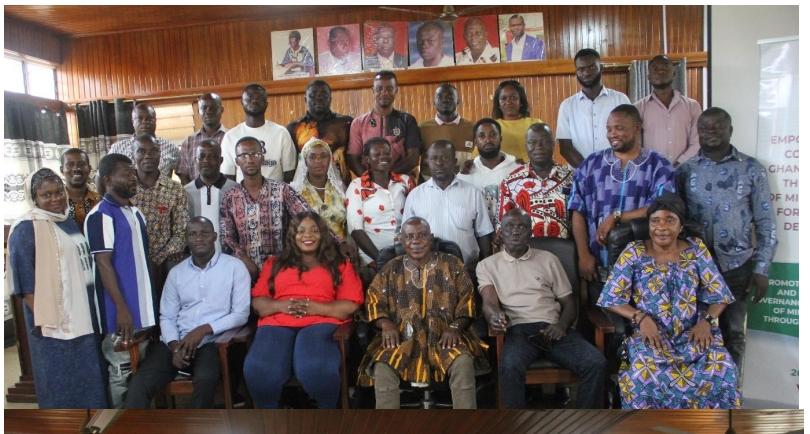
The call was made by Mr. Richard Adjei-Poku, a resource person, at a one-day capacity-building workshop organised for 27 Assembly Members in the Asutifi North District.
The workshop, held on June 4, 2026, was organised by the Ahafo Minerals Revenue Watch Volunteers (AMRV) with support from the Global Greengrants Fund (GGF).
Sustainable dev’t
Mr. Adjei-Poku said mineral revenues should not merely be used for physical infrastructure but should also contribute to job creation, skills development and sustainable livelihoods for residents, particularly the youth and women.
He urged the Assembly to consider using part of the funds to provide technical and vocational training in areas such as welding, plumbing and electrical installation, noting that such skills could benefit both local residents and mining companies operating in the area.
He further called for a review of scholarship allocations to ensure that mineral revenues adequately support students pursuing expensive professional programmes such as medicine, engineering, law and doctoral studies.
On infrastructure, Mr. Adjei-Poku encouraged the Assembly to use stakeholder consultations to determine projects that would have the greatest impact on communities.
Branding
He also proposed that projects financed with mineral revenues be clearly identified with plaques indicating their source of funding. This, he said, would enable residents to distinguish such projects from those financed through the District Assemblies Common Fund and other sources.
Mr. Adjei-Poku also drew attention to some of the negative consequences associated with mining, including loss of livelihoods, land degradation, deforestation, economic hardship and disputes within communities and among families.
At the same time, he acknowledged the potential benefits of responsible mining, including the provision of schools, hospitals and CHPS compounds, potable water, roads, electricity, scholarships and employment opportunities.
He therefore urged Assembly Members to be transparent and accountable in the management of mineral revenues and ensure that the resources were used in ways that would deliver long-term benefits to mining communities.
Building community awareness
The Assistant Chairperson of Ahafo Minerals Revenue Watch Volunteers (AMRWV), Miss. Amma Hawa said the workshop formed part of efforts to deepen transparency, accountability and public participation in the management of mineral revenues in the district.
She explained that additional Volunteers from Wamahinso, Ntotroso and Gyedu have been recruited to the existing 15 selected from Kenyasi No.1, Kenyasi No,2 and Ntotroso.
The volunteers have been engaging residents through churches and community sensitisation forums to educate them on projects funded with mineral revenues and promote greater public awareness of the benefits of mining.
Miss Hawa said the initiative was necessary because many residents previously had limited knowledge about mineral-revenue-funded projects and had consequently questioned the benefits of mining to their communities.
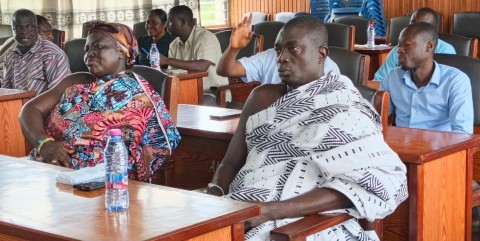
The workshop provided the Assembly Members with an opportunity to discuss the challenges and opportunities associated with mineral revenue management and to ask questions on how the funds could be used more effectively for community development.