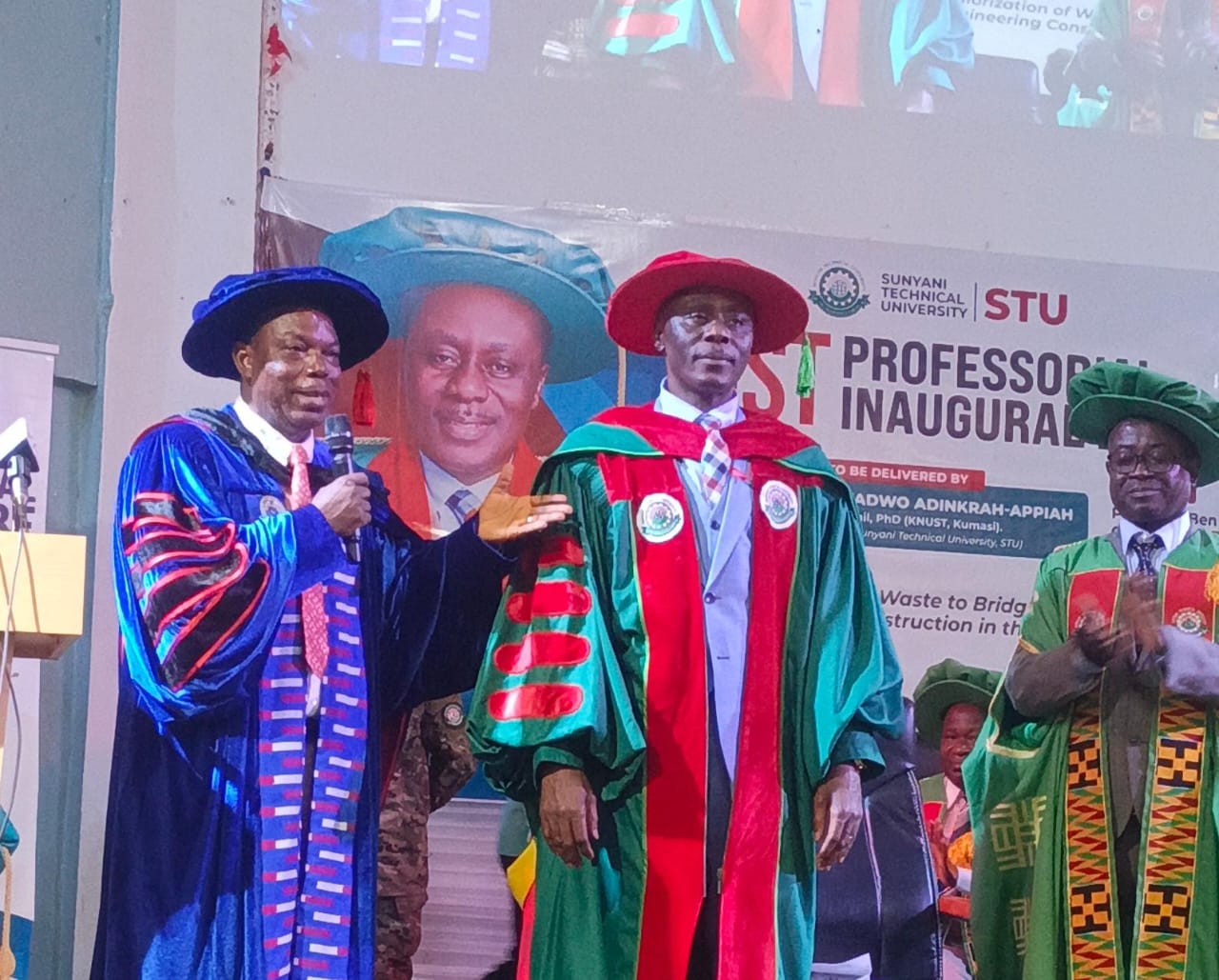
The Vice-Chancellor of Sunyani Technical University (STU), Ing. Prof. Kwadwo Adinkrah-Appiah, has called for a fundamental shift in Ghana’s construction industry from conventional building practices to circular construction, urging government, industry players and universities to embrace innovative ways of transforming waste into valuable building materials.
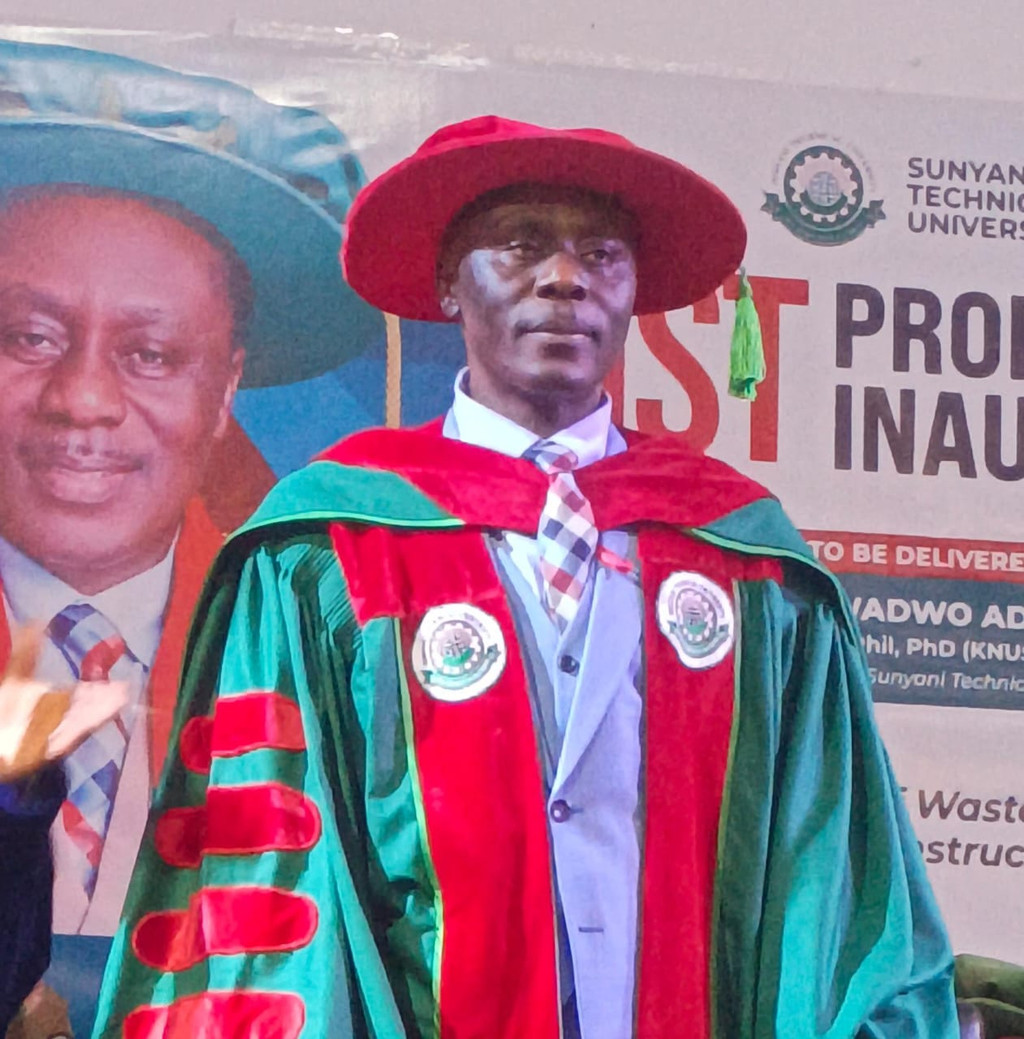
He said Ghana could significantly reduce the environmental impact of construction activities, lower building costs and conserve natural resources by adopting circular construction practices that promote the recovery, reuse and recycling of discarded materials.
Delivering his Professorial Inaugural Lecture on the topic, “Valorization of Waste to Bridge Circularity and Civil Engineering Construction in the Era of Sustainability,” Ing. Prof. Adinkrah-Appiah stressed that the country’s continued dependence on virgin construction materials, particularly sand, cement and natural aggregates, was placing increasing pressure on the environment.
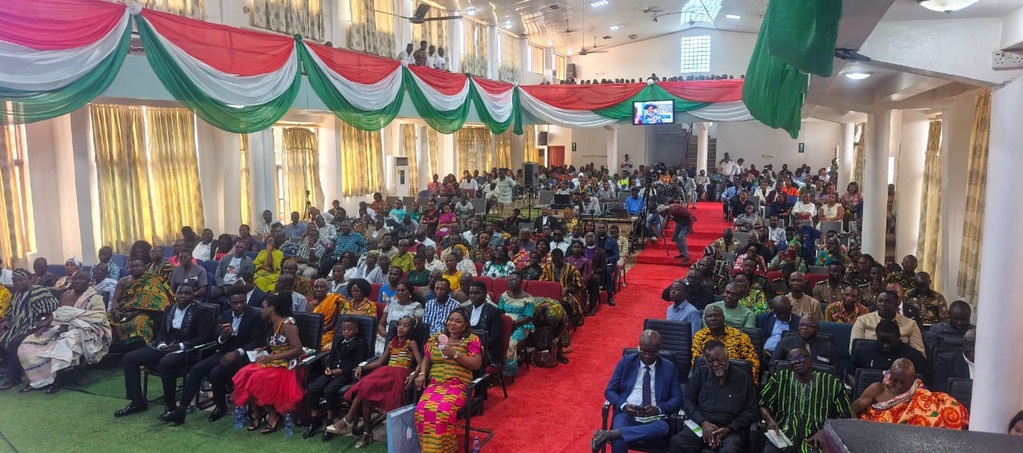
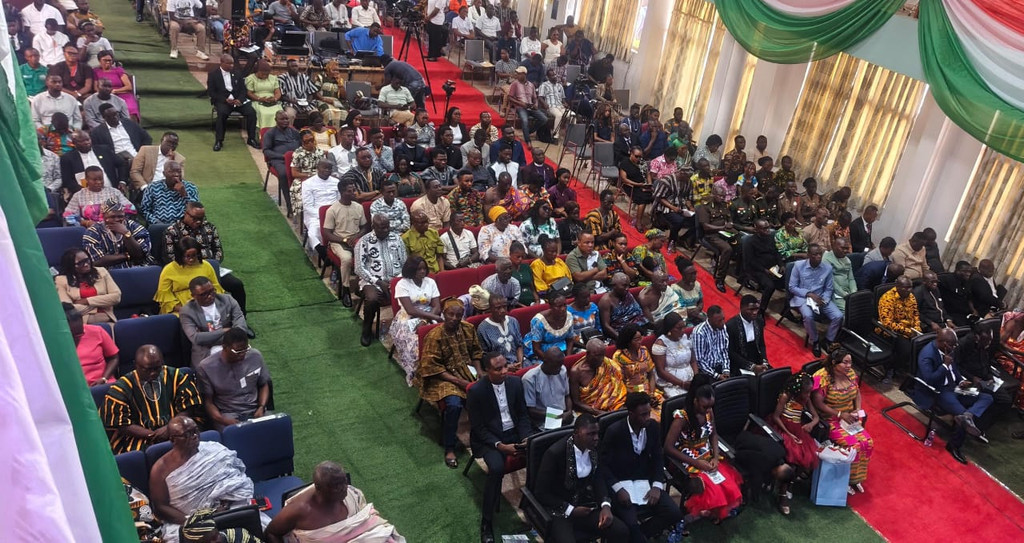
The event marked not only an important personal achievement for the Vice-Chancellor but also a significant step in strengthening STU’s academic identity, research visibility and contribution to knowledge and society.
Ing. Prof. Adinkrah-Appiah noted that about 90 per cent of the walls in typical Ghanaian buildings were constructed with sandcrete blocks, a practice that contributed to the excessive extraction of sand and other natural resources.
According to him, Ghana consumes more than six million tonnes of cement, equivalent to approximately 120 million bags, and over 120,000 tonnes of steel reinforcement annually, highlighting the enormous material demands of the construction industry.
Globally, he observed, the construction industry accounts for more than 34 per cent of solid waste generation, 35 per cent of greenhouse gas emissions and 42 per cent of final energy consumption.
He argued that the situation required a departure from the traditional linear construction model of extracting, processing, manufacturing, constructing, using, demolishing and disposing of materials.
Instead, he advocated a circular construction approach that prioritises designing, building, maintaining, repairing, adapting, reusing, recovering and recycling materials to minimise waste and preserve resources.
Potential of waste materials
Drawing on more than two decades of research, Prof. Adinkrah-Appiah demonstrated how locally available agricultural, industrial, plastic and construction waste materials could be transformed into useful construction resources.
He disclosed that his research journey, which had produced more than 50 publications in high-impact international journals and conference proceedings, was driven by an enduring interest in resource efficiency, prudence and environmental preservation.
One of his notable research contributions was the development of Salancrete blocks, produced from a combination of sand, laterite and cement.
The research established that Salancrete blocks achieved an average compressive strength of 5.76 MPa, compared with 3.78 MPa for conventional sandcrete blocks and 3.09 MPa for landcrete blocks.
The Salancrete blocks also recorded the lowest production cost, demonstrating their potential to support affordable and sustainable housing delivery.
The innovation subsequently earned him the Ghana Institution of Engineering’s (GhIE) Most Innovative Research of the Year Award in 2016.
He further highlighted research into the use of recycled concrete rubble and air-cooled blast furnace slag from steel manufacturing as alternative aggregates for concrete production, offering opportunities to reduce environmental pollution and the depletion of natural rock deposits.
Another study explored the partial replacement of cement with sawdust burnt ash in the production of laterite interlocking blocks. The findings showed that replacing 20 per cent of cement with sawdust ash produced optimum compressive strength.
In a separate 2025 study, his research team investigated the replacement of sand with raw sawdust in sandcrete blocks, establishing that the lighter blocks could be suitable for non-load-bearing internal partition walls, although their engineering properties were lower than those of standard blocks.
His team’s 2026 research also examined the use of palm kernel shells as coarse aggregates in reinforced concrete deep beams. The findings demonstrated improved ductility and normalised shear strength compared with conventional normal-weight concrete.
These research findings, he said, demonstrated that waste materials often regarded as environmental liabilities could become valuable resources for sustainable infrastructure development when properly processed and applied.
Barriers to sustainable construction
Despite the promising research outcomes, the Vice-Chancellor identified several challenges undermining the adoption of circular construction in Ghana.
These include inadequate uptake of research innovations, regulatory barriers, excessive extraction of virgin materials, limited facilities for processing and testing recycled materials, inadequate material traceability systems and weak collaboration among construction industry stakeholders.
He also cited limited markets for secondary construction materials, inadequate professional skills in circular construction, financial constraints and concerns about the quality and long-term performance of recycled materials.
He observed that Ghana lacked a comprehensive regulatory framework specifically dedicated to circular construction, making it difficult to establish clear specifications for the safe use of recycled aggregates and recovered building materials.
13 strategic interventions
To address these challenges, Prof. Adinkrah-Appiah proposed 13 recommendations directed at government, industry and universities or research institutions.
He urged government to incorporate circular construction into national construction policies and develop clear technical specifications governing the safe use of recycled, recovered and valorised construction materials.
He also called for public education on the benefits of circular construction, tax incentives for businesses and individuals involved in waste recovery and recycling, and the establishment of a national construction-material recovery and exchange platform.
Significantly, he recommended that public procurement become a major driver of circular construction through the enforcement of minimum proportions of recycled and recovered materials in government-funded infrastructure projects.
For the construction industry, he advocated stronger partnerships with universities and research institutions to translate innovative research findings into commercially viable building materials and construction methods.
He further urged industry professionals to embrace design-for-adaptability and design-for-disassembly principles, replacing the conventional project-based approach with life-cycle infrastructure management and assessment.
He recommended the gradual incorporation of digital material passports into major construction projects to enable the tracking of materials, including their composition, quantity, location, performance, maintenance history and recyclability.
Construction companies, he added, should develop comprehensive construction waste management and material recovery plans.
On the part of universities and research institutions, he called for the integration of circularity principles into civil engineering and construction curricula, alongside sustained research into appropriate local materials and innovative construction methodologies.
‘Building better is more important than building more’
Concluding his lecture, Prof. Adinkrah-Appiah maintained that the challenge confronting modern civil engineering was no longer simply how to build more infrastructure but how to build better while protecting the environment and conserving resources for future generations.
He explained that building better required using fewer virgin materials, prioritising locally available and recycled resources, designing durable structures, maintaining existing buildings instead of prematurely demolishing them, and recovering materials rather than sending them to landfills.
Describing the transition from linear to circular construction as more than an environmental movement, he characterised it as an engineering revolution requiring a fundamental change in the thinking and practices of engineers, policymakers, contractors and society.
He challenged civil engineers to look beyond the conventional question of whether a structure would stand and consider the resources consumed in its construction, its lifespan, potential for repair and adaptation, and the possibility of recovering its components at the end of its service life.
He posed two critical questions: whether Ghana could abandon the cradle-to-grave construction model in favour of a cradle-to-cradle approach, and whether construction, agricultural and industrial waste could be transformed into useful materials for new infrastructure.
His answer was emphatic: “Yes, we can..”
“Let us together valorise our waste! And let us patronise valorised materials in Ghana for the construction of our homes and other public infrastructure,” he urged.
Looking ahead, the Vice-Chancellor disclosed that his current and future research would focus on the valorisation of plastic and other synthetic waste materials as fibre reinforcement to improve the ductility and toughness of reinforced concrete elements.
He also expressed his readiness to supervise more master’s and PhD/DTech research students in the field and related areas to expand research contributions to circular construction in Ghana and beyond.
His lecture ultimately underscored the need for a collective national commitment to sustainable construction, where waste is no longer treated as something to discard but as a resource capable of supporting affordable housing, infrastructure development, environmental protection and economic growth.
Welcoming participants to the event, the Registrar of STU, Mr Stephen Yeboah, said the inaugural lecture represented an important academic tradition that provided newly appointed or promoted full professors an opportunity to share their accumulated research experience, scholarly achievements and future research aspirations with the university community and the general public.
He explained that, unlike conventional academic presentations which often focused on specific research studies, professorial inaugural lectures offered a broader and more comprehensive account of a professor’s academic journey and contributions to knowledge over several years.
According to him, the lectures also served as important platforms for translating complex academic research into accessible information that could be understood and appreciated by non-specialists and the general public.
Mr Yeboah noted that the initiative was particularly significant because it connected academic research and discoveries to practical societal needs, including national development, economic policy, environmental protection and the resolution of pressing social challenges.
He said such engagements enabled universities to demonstrate the practical relevance of their research while contributing innovative ideas and solutions to national development.
On the institutional front, the Registrar observed that professorial inaugural lectures helped strengthen the intellectual culture of universities, inspire students and early-career researchers, and showcase the research capabilities and academic standing of their institutions.
He described the maiden lecture as a landmark achievement for STU, providing an opportunity to celebrate the academic accomplishments of Prof. Adinkrah-Appiah and formally recognise his contributions to scholarship.
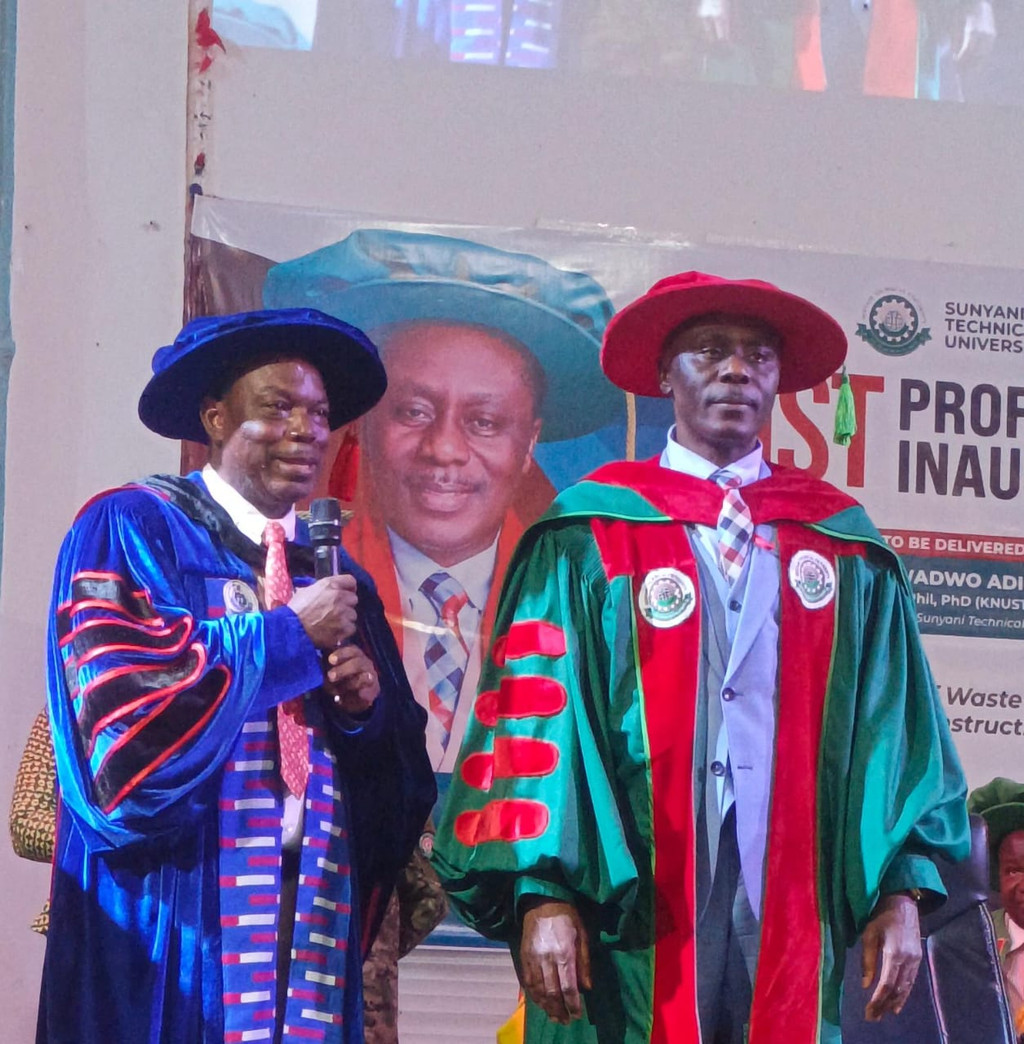
Mr Yeboah disclosed that the programme would also feature a presentation of the Vice-Chancellor’s career milestones and professional recognitions, followed by his robing, public celebration and formal admission into the University’s College of Professors.
He congratulated Prof. Adinkrah-Appiah on the achievement and welcomed participants to what he described as a historic academic occasion for the University.
The maiden lecture, he said, was expected to establish a lasting academic tradition at STU, providing a platform for professors to share their research journeys, inspire the next generation of scholars and demonstrate how university research could address contemporary development challenges.
The Vice-Chancellor of Ho Technical University, Prof. Ben Quarshie Honyenuga, who presided over the occasion, congratulated Ing. Prof. Adinkrah-Appiah on attaining this milestone.
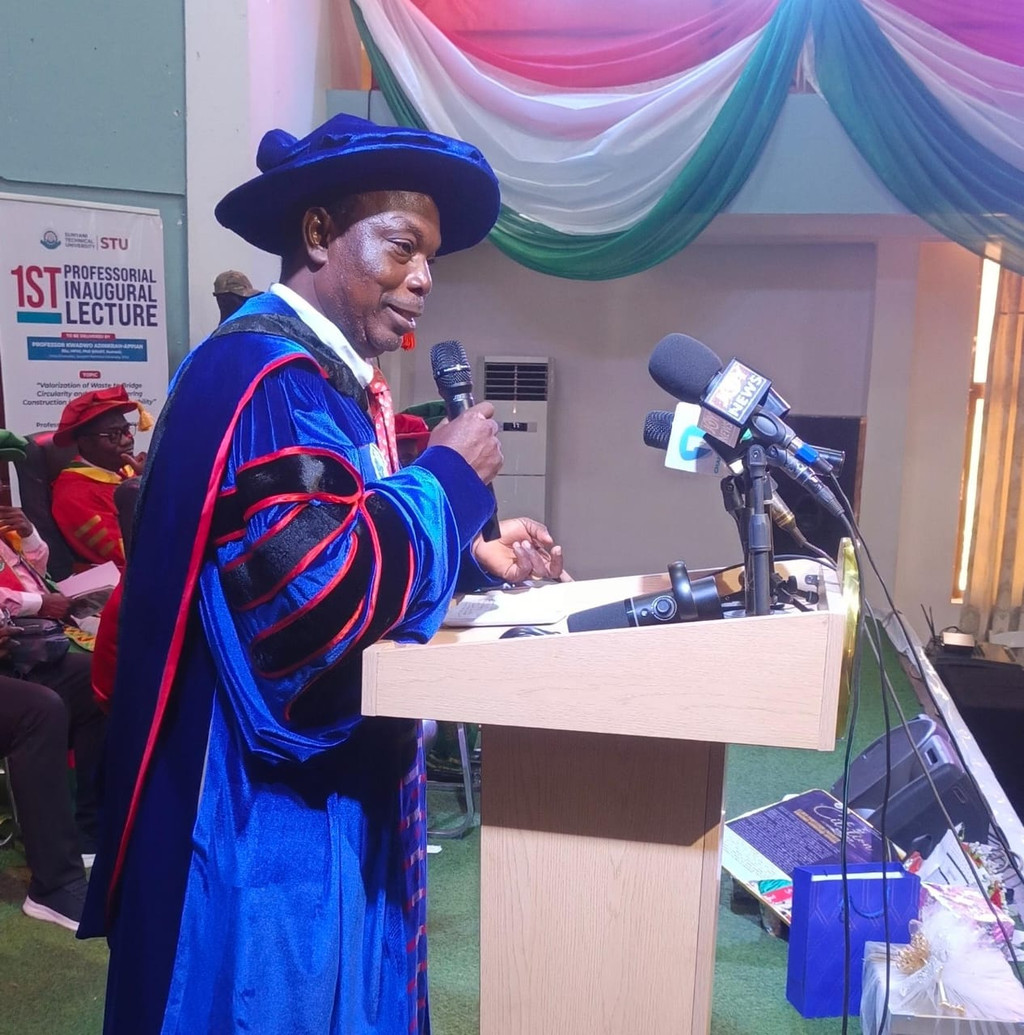
He described the occasion as more than a ceremony, saying it marked a defining moment in STU’s history and demonstrated the university’s commitment to becoming a centre of excellence in research, innovation and community engagement.
The event attracted hundreds of participants, including students and staff of STU, former Rector of the then Sunyani Polytechnic, Prof. Kwasi Nsiah-Gyabaah; former Chairman of the STU Governing Council, Dr. Kwame Agyeman Boakye; members of the clergy, security personnel and other dignitaries.
Also in attendance were students from Sunyani Senior High School, Twene Amanfo Senior High/Technical School, Notre Dame Girls Senior High School and Sunyani Technical Institute, among others.