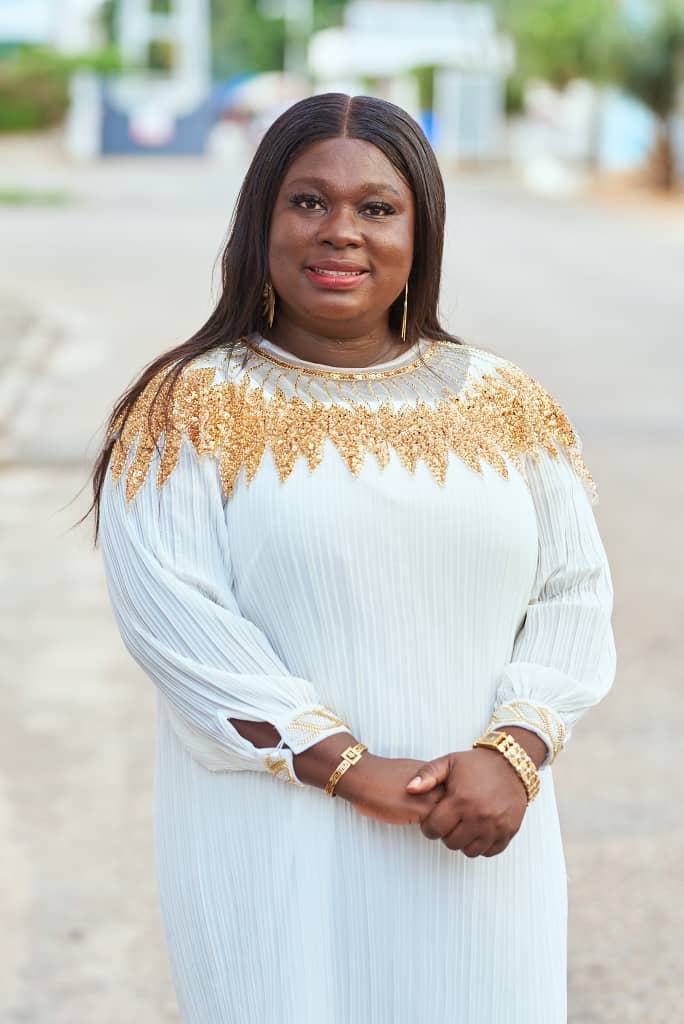
Planner Gifty Nyarko, African Ambassador for Inclusive Urban Governance and Climate-Resilient Development, has attributed the persistent flooding in Accra and other parts of the country to the rapid loss of urban greenery and urged Metropolitan, Municipal and District Assemblies (MMDAs) to take decisive action to promote climate-resilient and environmentally sustainable development.
Speaking to the media in Sunyani, Pln. Nyarko stressed that as planning authorities, MMDAs must ensure that all developments provide adequate space for landscaping, setbacks, greenery, and other environmental requirements during the development permit approval process.
According to her, the responsibility of the Assemblies does not end with the issuance of permits. She emphasized the need for regular inspections and strict enforcement measures to ensure that approved green spaces, landscaped areas, and permeable surfaces are not later converted into buildings, concrete pavements, or other unauthorized structures.
No space for vegetation
“It is unfortunate that in many urban areas, entire plots are being covered with buildings and concrete, leaving little or no room for trees, vegetation, and natural water infiltration,” she stated.
Pln. Nyarko observed that developments which leave no space for greenery significantly reduce the environment’s natural ability to absorb and store rainwater. This, she explained, increases surface runoff, overwhelms drainage systems, and contributes to recurrent flooding.
The planning expert, who is also the Executive Director of the African Centre for Urban Resilience Planning and Inclusive Governance (ACURPIG), said the protection of urban greenery should be treated as a critical strategy for flood management, environmental protection, and climate adaptation.
She noted that over the years, trees, wetlands, open spaces, grasslands, and natural drainage corridors in urban areas have steadily been replaced by buildings, roads, pavements, and other impermeable surfaces.
Flood defence system
According to Pln. Nyarko, the indiscriminate felling of trees, destruction of wetlands, encroachment on waterways, and conversion of open spaces into buildings have weakened the country’s natural flood defence systems and contributed significantly to flooding in major cities, particularly Accra.
She further stated that nearly every available space in many urban communities is being converted into residential, commercial, and office developments, forcing rainwater into homes, streets, and neighbourhoods.
Pln. Nyarko lamented that many open spaces originally reserved for recreation, environmental protection, and flood control have disappeared under concrete structures. As a result, rainwater can no longer infiltrate the soil and instead flows rapidly over hard surfaces into drains and waterways, causing them to overflow.
Nature
“Nature was designed to protect us from flooding. Trees intercept rainfall, vegetation slows runoff, wetlands store excess water, and open spaces allow rainwater to soak into the ground. These natural systems are our first line of defence against flooding. When they are destroyed, flooding becomes inevitable regardless of how much money is invested in drains and engineering infrastructure,” she explained.
She stressed that addressing the country’s flooding challenges requires more than the construction of drainage systems. Effective spatial planning, strict enforcement of planning and building regulations, protection of wetlands and waterways, preservation of open spaces, promotion of urban forestry, and collective action by government institutions, developers, traditional authorities, and citizens are equally essential.
“Floods do not occur because there is too much rain; they occur because there is too little space left for nature,” Pln. Nyarko concluded.