Story by Yaaba Yamikeh, Tarkwa
Gold Fields Ghana Foundation has launched a Prisons Agro-Support and Empowerment Project (PASE) to help strengthen food security and promote sustainable agriculture at Tarkwa prisons in the Western Region.
The project also seeks to equip the inmates with practical vocational skills and opportunities for successful reintegration into society.
It is designed to empower the inmates and prison officers with practical knowledge in oil palm cultivation, plantation management, crop husbandry and sustainable farming practices.
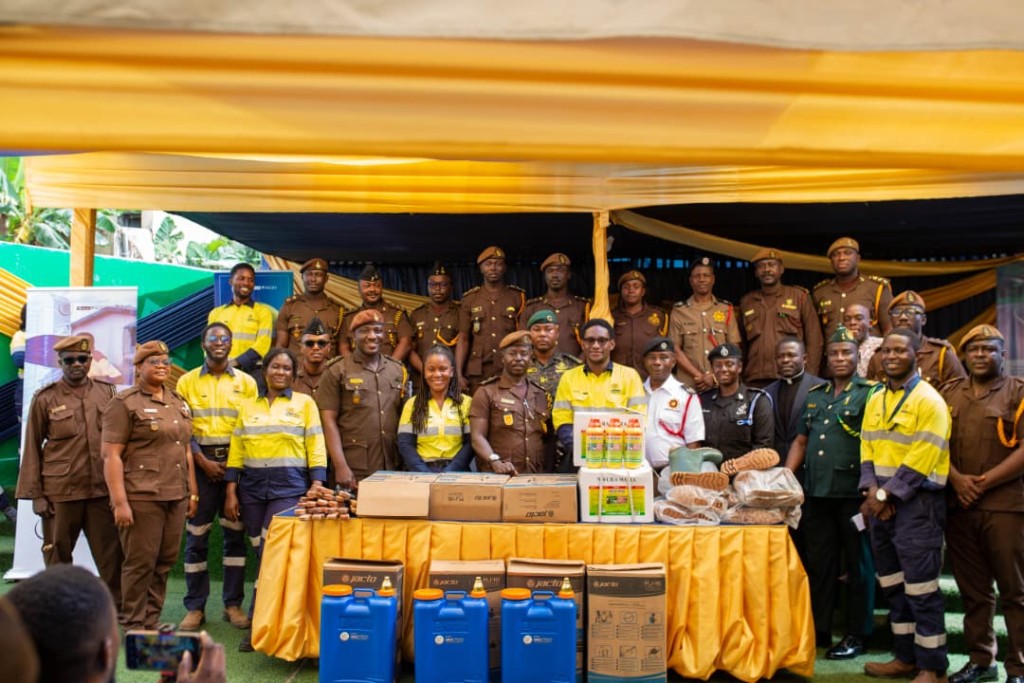
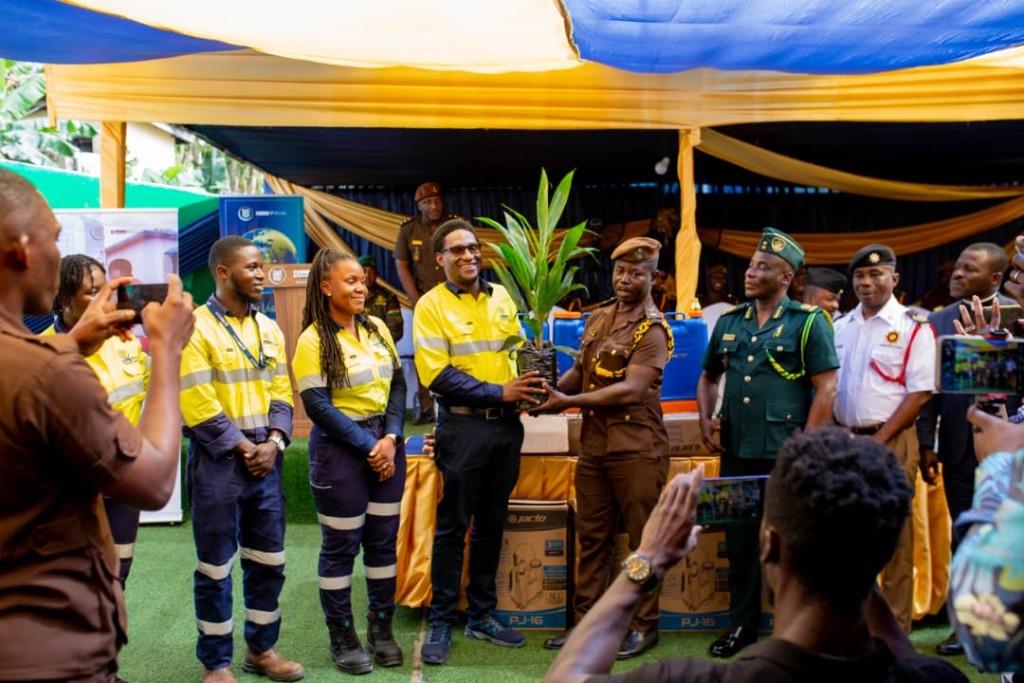
Launched on Thursday August 6, the PASE project will be used as conduit by the Foundation to further expand agricultural initiatives at the prisons.
Agricultural skills
The Tarkwa Prisons cultivated 30 acres of oil palm to support food production and equip the over three hundred and forty inmates with practical agricultural skills.
However, with just five cedis daily feeding allocation per inmate, the prison authorities saw the need to expand agricultural production to support food requirements and also create meaningful opportunities for inmate rehabilitation through farming.
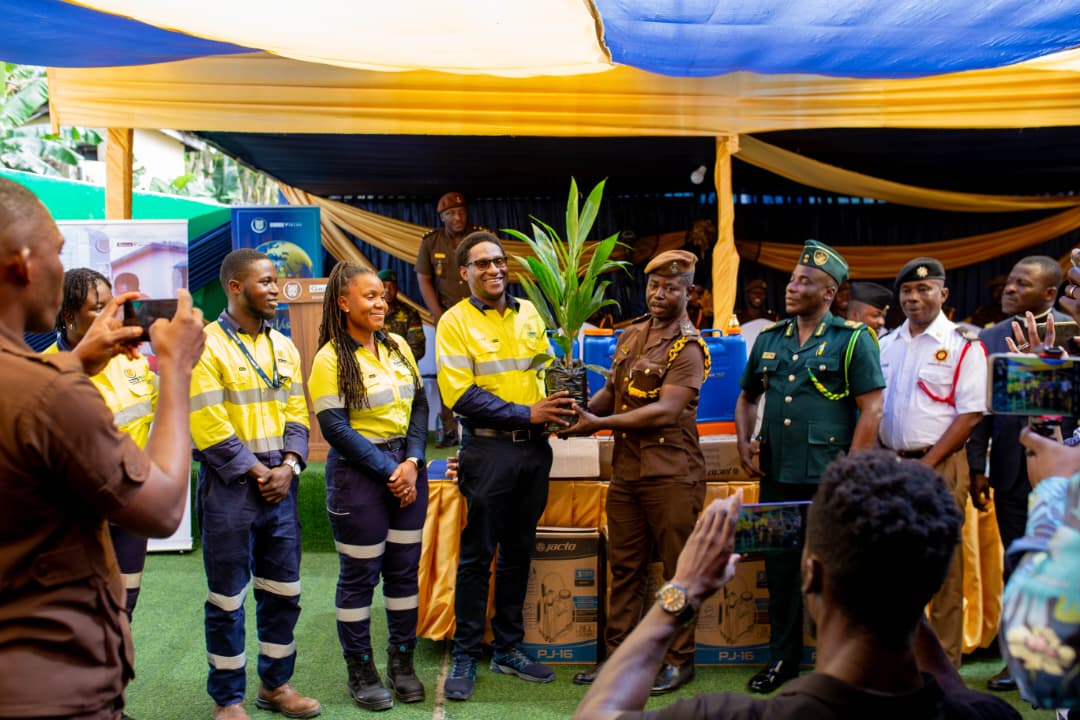
Gold Fields Ghana Foundation fortunately came in to support expansion of the prisons’ oil palm plantation by cultivating an additional 20 acres with 1,400 Tenera oil palm seedlings.
The Foundation has also supported Tarkwa prisons with 141 bags of NPK 15:15:15 fertilizers, 200 bags of organic compost, ten knapsack sprayers, 36 pieces of weedicide and other farm inputs at a cost of 144, 666.00 cedis.
Long-term success
Mr. Abdel-Razak Yakubu, the Executive Secretary, said this support reinforces the Foundation’s commitment to sustainable agriculture and long-term success of the PASE project.
He spoke of plans by Gold Fields Ghana Foundation to establish an oil processing center at the prisons to enhance value addition and reduce reliance on external suppliers.
The Executive-Secretary expressed optimism that employable skills being offered the inmates under the PASE project, will impact positively on their rehabilitation by preparing them for productive livelihood after their release.
He said it will also promote their dignity, self-reliance and restore renewed hope for the future.
He reiterated that the Tarkwa Prisons Agro-Support and Empowerment project reflects Gold Fields Ghana Foundation’s enduring commitment to creating value beyond mining by investing in people and sustainable livelihood.
“Through strategic partnership with Tarkwa Prisons, the Foundation continues to demonstrate that agriculture serves as a powerful catalyst for food security, skills development, rehabilitation and socio- economic transformation’, he said.
Mr. Yakubu disclosed that the Foundation has invested over US$7.48 million in enterprise development initiatives such as Community Oil Palm Project (COPP), Cocoa Farmers Support Programme (CoFaS) and Youth in Organic Horticulture Production (YouHoP) in the host communities since its establishment.
The commander of Tarkwa local prisons, Chief Superintendent Bright Gbogbo, described the PASE project as a ‘blessing’ and step in the right direction.
He said the project was in line with strategic initiative by the new director -general of prisons to transform the service through the ‘Think Prison 360 degrees ‘ policy which focuses on five pillars namely “welfare of staff and inmates’, ‘ agricultural mechanization’, ‘industrialization ‘, business and wealth creation ‘ and ‘ strategic relationships.
Chief Superintendent Gbogbo said the PASE project was a direct response to three of the pillars and commitment by authorizes in helping rehabilitate, transform and reintegrate inmates of Tarkwa prisons into the society.
He indicated that prisons do not only receive custody of inmates but also offer them employable skills, rehabilitate and transform them.
It is in this vein that he commended Gold Fields Ghana Foundation for helping offer inmates of Tarkwa prisons a second chance to be productive in the society.